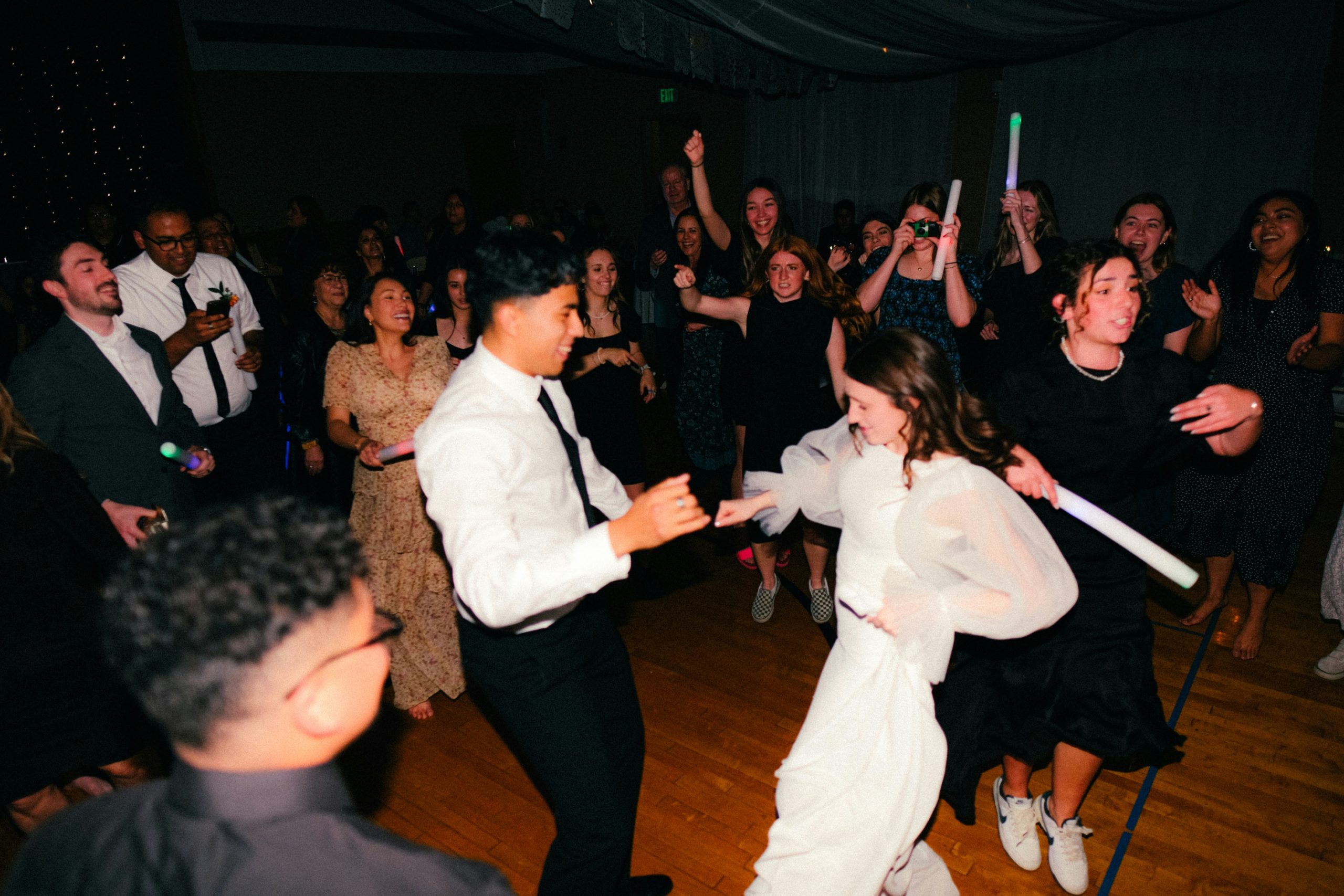
There is no such thing as the best wedding band.
There, we said it.
The perfect band for a 150-person château wedding in the Dordogne might be completely wrong for an intimate 45-person celebration beside Lake Annecy. A couple whose idea of a great night is Arctic Monkeys, Oasis and The Killers probably shouldn’t book exactly the same act as somebody dreaming of Motown, disco and funk.
And that’s before you factor in the size of the venue, where the musicians are travelling from, sound restrictions, production, budget and whether you want music for just the evening or throughout the whole wedding day.
This guide looks at the different styles, formats and types of wedding band available in France, who they tend to work best for, and some examples from the Après Ski Bands roster to help you understand what those options actually look and sound like.
The artists mentioned here aren’t a ranking and they’re certainly not our entire roster. We work with more than 150 bands, DJs and musicians, and the acts we recommend for an enquiry will always depend on your date, venue, budget and what you actually listen to.
It’s to book the band that makes sense for your wedding.
Start with the party you want, not the size of the band
First things first. You need your wedding venue booked. That will define all the timings and logistics for the live music or DJ on your big day.
One of the first things couples often tell us is:
“We think we want a four-piece band.” But the real questions are:
Do you want everybody screaming along to guitar anthems? Do you want soul and funk with a packed dancefloor? Do you want something polished and spectacular? Do you want the band interacting with your guests rather than standing on a stage? Or do you want something that starts acoustically during cocktails and transforms into a full party later?
Once we understand that, the line-up becomes much easier to choose.
If your playlists are full of Oasis, The Killers, Arctic Monkeys, Kings of Leon, Stereophonics and big British indie anthems, you’re probably going to be happiest with a band built around that energy rather than a more traditional soul-function-band sound.
Pattern Pusher are a great choice for couple wanting an energetic indie, pop and rock repertoire and a trio format that can also expand when required. They’re a useful reminder that you don’t automatically need five or six musicians to create a proper party.
And for couples who want the rock side turned up significantly further, Revolverlites bring much more of a live-show feel. Their performances lean into rock, pop-rock, huge medleys and guilty-pleasure songs given a much bigger guitar-driven treatment. They’re less “background wedding band” and much more “this is now a show”. But be quick to snap them, they have somewhat of a cult following!
For many couples, the ideal wedding band needs to move between generations and genres without the evening feeling like a random Spotify playlist.
This is where a versatile party band can be particularly strong.
Powell & Rose: The Band are a four-piece built around funk, soul, indie and pop, with powerful vocals and a rhythm section designed for dancing rather than simply reproducing songs note-for-note.
Evelyn & The Shakedown take that broader party-band approach into a five-piece format, moving between pop, rock, soul, funk and dance music. They have also performed destination weddings across locations including the French Riviera, Dordogne and Italian Lakes, alongside high-profile corporate and Alpine events.
Then there’s The Honey, another five-piece option with a more modern, rock-infused party feel. The Honey are a five-piece party band fronted by powerhouse vocalist Kyanna, with a set that jumps from Rihanna and Chappell Roan to Fleetwood Mac, The Killers, Led Zeppelin and Queens of the Stone Age. They’re a good fit for couples who want something modern and polished, but with more edge than a traditional function band. They’re also available as a cocktail trio, so they can cover a more relaxed part of the day before turning things up later on.
These bands tend to work particularly well at weddings where you have a broad mix of guests and need the musicians to be able to read the room rather than simply perform a fixed setlist from beginning to end.
If you’re having a smaller wedding
Small wedding does not mean small atmosphere. In fact, one of the most common mistakes we see is assuming that a more intimate wedding still needs the biggest band available. Put a six-piece showband into a room with 35 guests and suddenly half the wedding is on stage.
A duo or trio can be a much better fit.
Arkaduo, for example, are specifically designed to bring real big live-band energy into a compact two-person format. They work particularly well when couples want something more substantial than background acoustic music without the footprint or logistics of a full band.
Lightwoods are a really good fit for smaller weddings because they bring plenty of personality without needing a huge setup. With two lead vocals and guitars, they can keep things relaxed and warm during a ceremony or drinks reception, then lift the energy with pop, folk, soul and disco as the day moves on.
They’ve already performed destination weddings at venues including the Abbaye de Talloires, and they work particularly well for couples who want live music to feel part of the atmosphere rather than a full-scale stage show. For an intimate château, lakeside wedding or smaller guest list, that can be exactly the right balance.
A good compact act can sometimes be exactly what a small château room, restaurant, villa or lakeside venue needs.
The question isn’t “Can we afford a bigger band?”
It’s “Would a bigger band actually make this wedding better?”
If you want music from the ceremony through to the evening
Destination weddings often involve much more than a two-hour evening performance.
You may want music as guests arrive, something live during the ceremony, entertainment over cocktails and then a completely different energy later in the night.
That doesn’t necessarily mean booking four different suppliers.
Some artists are incredibly useful because they can change format as the day develops.
Sian Hayley Smith is a good example of a performer who can work solo while still creating a full sound through guitar, vocals, percussion and live looping. She can move between relaxed material and much more energetic songs and is also available as part of Lightwoods with Al Jones.
Joe Woolf is one of those rare acts who can genuinely take you through almost the entire wedding day. He can start with acoustic guitar or piano for the ceremony, move into jazz, soul or chilled live music during cocktails, then build things up later with drums, bass, vocals and live looping to create the sound of a full band from one performer. When the live set finishes, he can switch again and take over as the DJ for the late-night party.
For couples planning a full destination-wedding weekend, versatility can often be more valuable than simply booking the largest possible line-up.
If your guests are coming from everywhere
Destination weddings frequently bring together guests who don’t share the same musical references.
You may have family from France, friends flying in from the UK, American guests, Italians, Australians and several generations on the same dancefloor.
That changes what “a good wedding setlist” means.
You want performers who can recognise when something isn’t working, change direction and understand that one crowd may respond very differently to another.
Acoustic Partners are a particularly interesting option for international weddings because the Franco-Italian duo performs music in English, French and Italian across pop, folk, soul, jazz and international repertoire, and can expand into trio, quartet and electric formats.
Songbird also brings an international repertoire into a piano-and-vocals format, with music in French, Spanish, English and Portuguese and the ability to move from intimate background performance towards something more rhythmic and festive.
And Fernando Fher Costa brings a completely different flavour, combining pop, rock, funk, samba and Latin influences, with solo, duo and full-band options. Based in France, he’s particularly strong when you want warmth, personality and audience interaction rather than a rigid wedding-function format.
For an international wedding, repertoire matters, but the ability to read people matters even more.
If you want the band at the heart of the event
There is a difference between having music playing at your wedding and having musicians who become part of it. Some couples prefer a very polished stage performance. Others want musicians chatting to guests, taking requests and making the room feel spontaneous. Neither is better.
They’re simply different.
Acts such as Squid Lips have years of experience across après-ski, weddings, private parties and corporate events and are available in several formats from duo through to six-piece. That flexibility, combined with a very audience-focused performance style, makes them useful for couples who want a band that feels involved rather than distant.
It’s also one of the reasons Alpine performers often transition so well into weddings. Playing several live shows a week teaches musicians very quickly how to recognise what a room needs rather than relying completely on a pre-planned set.
If you want something bigger
Sometimes bigger is exactly right.
If you’re planning a large wedding, have a proper stage and production, and want the band to be one of the main features of the evening, a premium five or six-piece line-up can create a completely different scale of show.
Magnolia are a great example of that. Built around six experienced musicians, they’re a proper showband with the versatility to cover far more than just the evening party. Their repertoire stretches from soul and funk through to pop, rock, Motown and current tracks, but what really sets them apart is how many different formats they can offer. The same musicians can provide everything from solo and duo performances to cocktail sets, DJ + sax and the full six-piece band, so you can build the music across the whole wedding day rather than booking completely separate acts for every moment.
Hot Piece of Brass are the option for couples who want the band to feel big in every sense. With a full rhythm section, powerhouse lead vocals and a brass frontline of sax, trumpet and trombone, they bring much more of a festival or headline-show energy to a wedding. They’re known for getting out into the crowd rather than staying politely on stage, and their mix of funk, soul, indie and big pop tracks makes them a brilliant choice if you want the live band to be one of the moments everyone talks about afterwards. Their seven-to-eight-piece setup does need the right venue and production, but when the space allows it, they make an enormous impact.
UpTones bring a different kind of big-party energy. They’re a four-piece rather than a huge showband, but their set is built around keeping a mixed crowd moving, jumping from rock and pop classics into 90s and 00s throwbacks, dance anthems, indie favourites and some brilliantly unexpected medleys. They’re fronted by powerful vocalist Sophie and can also add daytime acoustic music or a manned DJ service, which makes them a strong option for couples who want a high-energy evening without necessarily going for a six, seven or eight-piece line-up.
The important thing is making sure the venue supports that ambition.
Large bands need room. They may need more production. Travel and accommodation become more significant, and the venue’s sound restrictions matter considerably more.
If you’ve found a beautiful château but the party room has a strict limiter and space for three musicians, an enormous showband isn’t automatically going to produce the best result.
Choose the venue and the entertainment together.
If you’re trying to keep the logistics sensible
This is particularly relevant for destination weddings in France.
A band can look affordable until you add five return flights, two nights of accommodation, airport transfers and local equipment hire.
That doesn’t mean you should never fly a band in. If you’ve found an act you absolutely love, the extra logistics may be completely worth it.
But it’s worth knowing where your musicians are based.
France-based artists including Lightwoods, Sian Hayley Smith, Acoustic Partners and Fernando Fher Costa can sometimes make the practical side of a French wedding considerably simpler because there may be fewer international travel requirements.
At the same time, international acts such as Uptones, Arkaduo, The Honey and Evelyn & The Shakedown regularly travel to France and are set up for destination bookings.
So don’t automatically choose “local” or “international”.
Compare the complete booking.
What size wedding band should you choose?
There isn’t a formula, but there are a few sensible considerations.
A duo or trio can be brilliant for smaller venues, more intimate weddings, cocktail receptions and venues with limited performance space. A four-piece is something of a sweet spot for many evening weddings because you get drums, bass, guitar or keys and strong vocals without the production demands of a much larger group. Five and six-piece bands can add extra vocals, keyboards, saxophone, percussion or brass and create a bigger visual and musical impact.
But guest numbers alone shouldn’t decide it.
We’ve seen smaller bands absolutely dominate large rooms because they’re brilliant performers, and we’ve seen weddings where the venue itself makes a compact setup the smarter choice.
Ask yourself what you’re buying the extra musicians for.
If the answer is “because six sounds better than four,” speak to us first.
You might be surprised.
How much does a wedding band in France cost?
Prices vary enormously because you’re not comparing one standard product.
A France-based trio driving two hours to your venue is a different booking from a six-piece UK band flying into Provence with accommodation and local production.
As a rough guide, current professional party-band prices in France can begin around €3,000 for compact options and rise through €5,000–€10,000+ for established destination bands and larger premium line-ups.
Rather than trying to squeeze every possible price into this article, we’ve already put together a full Wedding Band Cost in France 2026/27 Guide, covering solo musicians, duos, DJs, DJ Live, party bands, travel, accommodation and production.
If budget is one of your main deciding factors, start there.
Think about what happens before and after the band
Your main evening band is only one piece of the wedding soundtrack.
If you also want live ceremony music, cocktails, dinner entertainment and a DJ afterwards, choosing the right band may be partly about what else they can offer.
Some artists can perform acoustic sets earlier in the day. Others work in multiple line-ups. Some can provide a DJ service afterwards, while others are designed specifically to deliver one enormous evening performance and nothing else.
Neither approach is wrong.
It comes back to the wedding you’re planning.
Our Wedding Music Timeline goes through the whole day in much more detail, from guest arrival and ceremony music through to cocktails, first dance, band and late-night DJ.
So how do you actually choose?
Forget the search for “the best wedding band” for a moment and start with five things: your venue, your approximate budget, your guest numbers, the music you genuinely love and the atmosphere you want at the end of the night. Once we have those, we can narrow the field surprisingly quickly.
If you tell us:
“We’re getting married at a château in Dordogne with 120 guests, mostly British and French, we love indie and soul, don’t want anything cheesy and have around €6,000 for the evening entertainment,” that’s far more insightful than:
“We want a good band.” The more we understand about you, the better the recommendation becomes.
And what if you still don’t know what you want?
That’s completely normal. Most people don’t spend their lives comparing wedding bands. You don’t need to arrive with a detailed brief, a preferred line-up and a spreadsheet of songs. Tell us what you do know.
Maybe you loved a particular gig. Maybe you definitely don’t want traditional wedding music.
Maybe half the guests are obsessed with rock and the other half want disco. Maybe you just want everybody dancing.
That’s enough to start.
At Après Ski Bands, our roster covers solo musicians, acoustic acts, duos, trios, full party bands, DJs, DJ Live and larger premium line-ups for destination weddings throughout France and Europe.
Rather than asking you to work your way through more than 150 artists, we can shortlist the ones that actually fit your wedding.
Because there might not be one best wedding band.
But there will almost certainly be a right one for you. You can trust our consultants to help you make the right choice.
Frequently Asked Questions
What type of wedding band is best for a wedding in France?
It depends on your venue, guest numbers, music tastes and budget. Smaller weddings may work brilliantly with a duo or trio, while larger celebrations can suit four, five or six-piece party bands. The style of music and the band’s ability to read your particular crowd matter more than simply choosing the largest line-up.
Is a three-piece wedding band big enough?
Absolutely. A strong trio can create a full, high-energy sound and may be better suited to smaller venues, sound restrictions or more intimate weddings than a larger band.
Is it better to book a wedding band based in France?
It can make travel and accommodation simpler, but it isn’t automatically the better choice. International bands regularly perform destination weddings in France. Compare the total booking cost, logistics and how well the act suits your wedding.
What music should a wedding band play?
The best wedding bands adapt their repertoire to the crowd while staying true to their own style. Some specialise in indie and rock, others in soul and funk, while versatile party bands cover several decades and genres.
Can a wedding band play during the ceremony too?
Some can. Many musicians offer solo, acoustic or duo formats alongside their main party-band lineup. Ask what additional options are available before booking separate suppliers.
Can a wedding band provide a DJ afterwards?
Some bands and musicians offer DJ services as part of a wider package, while others work alongside a separate professional DJ. If you want the party to continue after the band’s final set, ask about this when you enquire.
How much does a wedding band cost in France?
Professional wedding bands in France can range from around €3,000 for more compact party bands to €10,000+ for premium destination line-ups. Travel, accommodation, production, band size and location can all affect the final price.
How far in advance should we book a wedding band for France?
For popular summer Saturdays and destination weddings, booking 12–18 months ahead gives you the widest choice. Highly sought-after artists may book even earlier, although good options can still sometimes be found closer to the date.
How do we find a band that works for an international wedding?
Look for musicians with experience performing for mixed crowds and a broad enough repertoire to move between different generations and nationalities. Multilingual or internationally experienced artists can also be particularly useful for destination weddings.
Talk to us today! Fill out the enquiry form and someone from our team will be in touch shortly.